

Museum. Ancient slabs with hieroglyphs stand behind the glass cases. Beautiful tapestry hang on the walls supplied with the sign “Do not touch!”. People walk slowly among the silent showpieces… looking… looking… and looking…
This is the “traditional” image of a museum of any specialization, be it historical, zoological, cultural, etc. You can visit such museums in almost every city of the World. And it is great that we have them to spread knowledge within the society.
However, these “traditional” museums have one very strong limitation – they focus primarily (if not solely) on the visual channel of transmitting information. Thus, they ignore other elements of the so-called VAK (Visual, Auditory, Kinesthetic) or SAVI (Somatic, Auditory, Visual, Intellectual) learning style models. In other words, you only see things, but have no possibility to hear how they sound (for instance, the song of a certain species of birds or the tonality of a musical instrument), to touch them (for example, to know what they are made of), to “play” with them in order to understand how they work, and last but not least to check what you have learned from each visit to a museum.
However, the good news is that more and more museums understand the importance of engaging all information channels in the learning process and incorporate them through various creative projects and exhibitions. This allows attracting people’s attention to and increasing their awareness of even such “simple” and “usual” things as water.

As an example I offer you to watch a short video taken at the mobile exhibition “Train of Ideas: Visions for Future Cities” aimed at informing people about ideas and ways of designing ecologically-friendly and sustainable cities and living in them. I managed to visit it when the exhibition was in Copenhagen, Denmark, at the end of April this year. The video shows only a small part of it dedicated to incorporating Nature into urban structure and the issue of water resource management. There you could try designing your own “green” city, feel yourself as part of it, play music with tap water, learn about the composition of water and where it comes from, see videos about modern “green” city design, and much more.
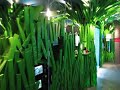
Within the exhibition there were also sections dedicated to renewable energy, waste management, way of living in an environmentally-friendly city, how people can move towards such living, and other.
As you see, even the simplest but creative ideas may bring significant benefits both to the organizers of an exhibition in terms of attracting visitors and to these visitors in making the learning process more interesting, fun, and impactful. And such ideas should be incorporated not only in the activity of museums, but in education as a whole, including schools, colleges, universities, and specialized courses. This should produce significant synergetic impact, because you engage all elements of the VAK or SAVI learning model in an integrated manner.
So, let’s get INTERACTIVE!
Filed under: Denmark: Behind the Curtain


